Pick Up Your Q: Rolando Salazar

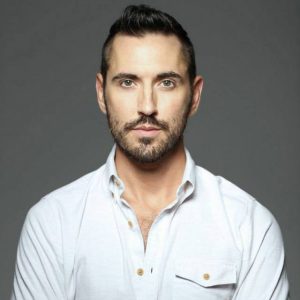
Music Administrator Rolando Salazar began working at The Atlanta Opera in 2015, and since then, he has worn many hats. Since the departure of longtime Chorus Master Walter Huff, Salazar has stepped in to lead The Atlanta Opera Chorus in the meantime, and recently facilitated the general auditions in June. We chatted with him about the huge task of casting chorus members, audition prep, and what makes a cohesive opera chorus.


Tell us a little about yourself: where did you grow up and how did you get into music?

My three passions are opera, country western, and sacred music, but not necessarily in that order. This season I will be serving as interim Chorus Master and Assistant Conductor for each production in the 2017-18 season. In addition, I will continue to coach and work with the Atlanta Opera Studio each week on solo rep, roles, and the Studio Tour. I moved to Atlanta seven years ago to study conducting at Georgia State University. I had previously been living and working in Amarillo, TX, and worked with Michael Palmer as his assistant at the Bellingham Festival of Music in Bellingham, WA.

I have a funny history with Atlanta. When I was in high school, I was a singer and had been very successful in competitions – UIL and those types of things. One year, the Texas All-state Choir rep included the Verdi ‘Quattro Pezzi Sacri.’ Being from Beeville, a small town in South Texas, I had zero clue about what I was singing or what being a good singer really meant. One afternoon at a rehearsal, my choir director, Penny Lamberson, gave me a CD of the Atlanta Symphony Orchestra and Chorus under Robert Shaw performing the Verdi and the Stravinsky Symphony of Psalms. I had never heard music like that. That recording, that very night at home changed my life and inspired me to want to be in music.

A few years later right before college I started my piano training with my former middle school chorus director, Cheryl Roberts. When I started college I had been playing only for about three months, but soon discovered that I could sight read. The piano skills developed, the singing developed, and that then took me down the path of wanting to be a conductor. Conducting allowed me to sing (yes, I do sing often in private coachings) and work with choruses, amazing soloists, and orchestras.

Upon arriving to Atlanta on the invitation of Michael Palmer, I fell more in love with the music scene and all the wonderful singers and instrumentalists in town. The talent in Atlanta in incredible! I often pinch myself in coachings and rehearsals, or I play a recording of the Verdi ‘Quattro’ on my way home from a long day at the office because it reminds me that the Atlanta music scene, in a weird and distant way, played a hand in my development as a musician, and I am honored and humbled daily to be able to give back in so many ways.

What is your casting process for putting together a cohesive opera chorus?

The score. One must always go directly to the score and see what the composer intended in his or her writing. In addition to looking at divisi and the character of the writing, one must also be aware of the accompanying forces in the pit. For The Flying Dutchman we have opted for forty men and twenty women. The basses have to have good top Fs, the first tenors have to have great high B flats, and the women must be able to sing beautifully and in tune as an ensemble, as well as match twice as many men and a strong orchestra underneath. I also like to look at the text of an opera as it really helps to identify what sort of approach to the sound I would like to take, sometimes measure by measure, sometimes even beat by beat. Once this “sound” is set in my head, I look at the voices we have available and start piecing together each section, one person at a time, until the entire chorus is cast. It’s like a great big puzzle, and it takes hours to put it together, and the anticipation increases daily for that first chorus rehearsal to see how it’s all going to work out!

During auditions, is there an “it” factor you’re looking for, or is it more technical than that?

There kind of is an “it” factor, but it is very difficult to explain. For me, that “it” factor is what the voice does. How does it fill the room and make the air seem to vibrate? How does it fall on our ears and go through our bodies? What about the dynamic range and technical ability? Is is powerful, beautiful, exciting, unique? Does it move me? Having sat on numerous audition panels I can tell you we always want to hear people sing their absolute best. It is thrilling for us listening to feel the energy, the focus, and hear great vocalism from a singer. It really usually takes a few notes to grab or lose a person listening. Presentation, confidence, and choosing pieces that show off the best of your singing go a long way. And even if all these things are present, or not, the sound of the voice itself, that “it” factor, is what will win a person an audition.

Besides knowing the material, what else should singers do to prep for an audition?

Every singer is different, and I have all the admiration in the world for all they must go through before an audition or performance. For some that means hydrating all day and the night before, eating only certain foods, yoga, so many different things. My advice is to be sure you select rep that you can roll out of bed and sing well. Be sure you have coached your music before your audition. Don’t bring in something obscure that nobody has heard of. And I always tell singers, because this is what I try to do before a performance, use the nerves to your advantage!

Are there any audition pieces that you think are overdone?

I don’t really think so. Sometimes the nature of hearing sixty to hundreds of singers in a day makes it seem like pieces are overdone. If twenty sopranos come in and sing the same aria well, then I am happy to have heard every single one of them.

What makes a good chorus?

The singers, period. Great singing, commitment to creating another character on the stage, made up of the entire chorus, great acting, and loving what you’re doing!

Finally, overrated or underrated: Colorful socks (a la Justin Trudeau)

YES, wear them!
Summer Mixtape

17Summer_Instagram

What do you think of when you think of summer? Long days, a relaxing, easy-going vibe, and heat, heat, heat. That’s what Music Administrator Rolando Salazar thought of when we asked him to put together his idea of the perfect summer opera playlist. Everything is listed below for your reference. Enjoy!

  1. Street Scene: Ain’t it Awful, the Heat
  2. Porgy and Bess: Summertime
  3. Tales of Hoffman: Belle nuit
  4. Sweeney Todd: By the Sea
  5. Susannah: Ain’t it a pretty night?
  6. Serse: Ombra mai fù
  7. Samson: Total eclipse
  8. Pagliacci: Stridono Iassù
  9. Lohengrin: Elsa’s Procession to the Cathedral
  10. The Pirates of Penzance: Climbing Over Rocky Mountain
  11. The Marriage of Figaro: Overture
  12. The Secret Gardener (La finta giardiniera): Introduction
  13. Carmen: Habanera (L’amour est un oiseau rebelle)
  14. Romeo and Juliet: Je veux vivre
  15. Rossini: Cat Duet (Duetto buffo di due gatti)

Pick Up Your Q: Brian Clowdus

Brian Clowdus is the Artistic Director of Serenbe Playhouse, a site-specific theatre company tucked neatly into the Sernebe community, about 40 miles south of Atlanta. He’ll join The Atlanta Opera this fall to direct Kurt Weill and Bertolt Brecht’s The Seven Deadly Sins, the first selection in our 2017-18 Discoveries series. We chatted with him about his love of site-specific theatre, how audiences may be transformed, and how the piece is like grand dame Joan Crawford. 

How did the idea of Serenbe Playhouse come about, and what is your role as Artistic Director?

It was a complete kismet moment. I visited 9 years ago on a whim with my sister and got this intense gut feeling the moment I stepped onto the property. I couldn’t articulate what that feeling meant but it was something special. That gut feeling turned into me sending a blind email to Serenbe, which led to a meeting of me pitching a theatre company, which led to me putting a business proposal together (I had zero idea how to do that but thankfully there are books on how to start a theatre!). Low and behold, I charmed them enough and the proposal was approved. I received $15,000 to start the company and now 8 years later we are operating at a 1.2 million dollar budget, completely self sustaining on ticket sales and fundraising as the premiere national site specific theatre company. People often ask if being site-specific was part of the original plan – it wasn’t. It happened initially out of necessity and immediately that’s what audiences were responding to. So, we kept building on it and listening to what people were connecting with and a huge part of that was nature and being in new locations for each show! As Artistic Director I am charged with maintaining the mission and vision I created 9 years ago. This covers everything from choosing our season each year to making sure that the guest experience begins the second they step out of their cars. At Serenbe Playhouse you are never waiting for something to begin, it all happens immediately!

As a director, what interests you about The Seven Deadly Sins?

I have never directed an opera, but I have often been told that I have an opera eye and aesthetic, so when Tomer approached me I was over the moon! I am always drawn to emotionally evocative and dark material and I am a big fan of Kurt Weill and the whole genre of music and culture. I love that his music gives me all the feels and the second you hear Kurt Weill you know immediately that it’s him. There is always a second or third layer of what’s going on in his stories and music and I can’t wait to explore and dissect what will be going on in our version.

What is your vision for the piece?

I am creating a very theatrical world reminiscent of a swanky 1920s/1930s cabaret lounge where Anna is the diva and star of the evening. The first section will have us immersed in the backstage world where we see actors getting ready for her arrival and even glimpse of her silhouette or her back anticipating the grand dame entrance. Finally, the moment arrives and Anna has her star entrance and performs The Seven Deadly Sins, and at moments it’s unclear if she is a lounge singer or if she has entered the world of this piece. Think of it as if Joan Crawford and Black Swan met up in a dark, seedy German alley with lush, red velvet curtains from floor to ceiling. That’s all you get, folks!

What are the challenges and advantages to directing and performing in a non-traditional space like Le Maison Rouge?

For me it’s ALL advantages. I am so inspired by the environment I create theatre in and I have always been a huge fan of Le Maison Rouge. I had already visualized theatre there before I even knew this project was happening, so it’s a literal dream come true for me. In site-specific work, the set is mostly already there for you. It’s my goal for anything we add to live in the world that’s already there –  that can include a mirrored runway or a famous opera diva entering the world. It all lives there and feels completely immersive with action in front of you, behind you and even in your lap at times!

How is Anna’s story relevant to a modern audience?

We all have two sides. We all struggle with Good vs. Bad. What is Good vs. Bad? What is moral and what is not? Do you live the life that makes you happy or the life that makes others happy? Do you follow your carnal desires? Do you commit sins on purpose or is that the other part of you that you can’t control? I will leave those questions for our modern audience – those questions have been asked since the beginning of time.

What can audiences expect?

They can expect something they have never seen before. They are going to forget they are watching a theatre opera piece – they are going to be in it! They are going to be terrified, saddened, and even laughing at times. I can guarantee they will leave thinking about what they experienced and will keep talking about it for days. They will look in the mirror that evening before going to bed wondering which version of themselves they are seeing. We all have two sides, it just depends on which one has control at which times in our lives.


Learn more about Brian Clowdus and Serenbe Playhouse: http://bit.ly/2rINfQR


Pick Up Your Q: Marcy Stonikas (Turandot)

Marcy Stonikas has performed Turandot three times, and each time she is able to breathe new life into a truly challenging role. We chatted with her about the complexities of Turandot, what makes the character relevant today, and her favorite musical moments.


Where did you grow up, and when did you start singing?

I grew up in Elmhurst, IL, which is a suburb of Chicago. I was singing as soon as I could make noise, I’m fairly certain. I started piano lessons with my next-door neighbor at five, and was singing in church choir around the age of six or so.  I started community theatre in middle school, and did musicals, choir, madrigals and jazz choir throughout high school (all while also in band and orchestra), which is all what lead me to audition for various music programs for college.

Who or what are your greatest influences?

I would say that my greatest influences are a diverse bunch, ranging from my family to my favorite singers of the past, present and future (and from all genres of music). I find my performances are greatly informed by the love I have for my husband, and more recently, for my son. Being a mother has changed the way I view the world and how I interpret music, hopefully for the better.

What drew you to opera?

I started studying classical voice privately around the age of 15 or 16, and I was singing art songs and the occasional aria, but had never actually seen one until I auditioned for colleges. Symphonic music was probably a major gateway to opera, however, and I had been going to the symphony throughout high school with my friends, which probably seems strange to some people, but it was such a wonderful experience! I got to take the train from our little quiet suburb to the city, and then go hear phenomenally talented musicians (the Chicago Symphony Orchestra is still amazing!) play the music of Hayden, Mozart, Beethoven, Verdi, Mahler, etc. – I couldn’t get enough! Then my senior year I saw a double bill of The Old Maid and the Thief (Menotti) and the RARELY seen/performed Slow Dusk (Floyd) at Oberlin College’s Conservatory of Music, which is where I ended up attending. It was a perfect juxtaposition for me because I got to see one very charming, comical story and one very dramatic, lyrical one and they both struck a major chord with me. It probably didn’t hurt that I also related very much to the soprano lead of Slow Dusk; she became a very early operatic idol/mentor to me later on in school. I think the combination of my beloved classical music with singing was the lynch pin for me, and everything finally made sense!

What is challenging about the role of Turandot?

The biggest challenge I faced before first performing the role of Turandot was how to make her someone that I didn’t hate. I have always made it a top priority to find a way to make every character that I play 3-dimensional, sympathetic and unavoidably, a bit of me. This was something that continued to plague me as I walked into my first day of rehearsal with Renaud Doucet. After a relatively short conversation with him, I nearly started crying out of relief because his objective of turning her into a real person, and not the typical “black widow spider princess,” was so in line with my own thinking. That collaboration made my process so much easier because our end goals were the same.

What are some of your favorite musical moments?

One of my absolute favorite moments in ALL opera is the Act I finale (which I don’t get to sing, lol!). It has amazing orchestration and everyone is wailing away on their own individual lines; so cool, so beautiful. Another favorite moment is actually the Ping/Pang/Pong trio at the beginning of Act II. I never tire of the charm of these characters, and I love when I can watch the fun choreography from the wings and in rehearsal! And to not seem strange to exclude any of Turandot’s music, I absolutely adore the end of Act 2 as well on many levels. Again, it’s such an amazing moment in music with the chorus singing loudly and together; I always feel enveloped by their sound and it’s such a cool experience. And then to get to “break free” from their demands by soaring above them all on a couple of high C’s – that’s pretty darn fun!

Having performed Turandot before, has anything changed or evolved in your interpretation?

My interpretation of the role of Turandot after performing as her several times now, has absolutely evolved. I think one of the most fundamental changes that has occurred is that I am more comfortable in my role as a princess. I initially found it difficult to play someone of such a position, as it’s so foreign to anything that I know, really in any way. We don’t have a royal family in this country at all, and I wasn’t even sure how to move, let alone how to get around in the costumes on the challenging stage design. The other thing that’s probably evolved over the years has been that I am more comfortable letting the music guide me, motivate me, inform me. It’s all there: Puccini was the master of putting every little nuance into the score.

Do you see yourself, or women in general, in her?

So, hearkening back to a couple of questions ago, this was something that I needed to imbue into my first Turandot – a real person, a woman, MYSELF. My goal is to break down the perception of the commoners (chorus) so that the audience doesn’t just see me as a merciless princess but a woman who carries a lot of baggage. She has major shoes to fill, a lot of obligations to live up to, and she simply doesn’t feel that she needs a man in order to do her job well. These are all things to which I, along with other modern women, can relate. She doesn’t lure any men to come and court her – the suitors that perish have done so completely of their own volition, knowing full well of the danger in their failure.

How is the story of Turandot relevant today?

If you can strip away the title of princess and make Turandot’s problems more basic, everyone can relate to her on some level. Additionally, the reoccurring theme of someone willing to sacrifice themselves for the love of another person (both Liù and Calaf do this) is still very current. Sure, it may not be a matter of life and death, but we all make sacrifices for our loved ones regularly and would do anything in our power to prevent them from harm.

Learn more about Marcy: http://www.marcystonikas.com/


Usage of any images on this blog is restricted to The Atlanta Opera and approved news websites. Any other usage, particularly for professional purposes, must have written permission. For additional information, please contact The Atlanta Opera at 404.881.8801

Don Pasquale Director’s Notes: Chuck Hudson

Photo: Philip Groshong for Cincinnati Opera
With DON PASQUALE, Donizetti gives us champagne for music
and so the comedic style in the acting must match this excellence or it would
be like mixing bubbles with beer! I had the privilege of working with a master
of comedy, Marcel Marceau. At his school in Paris, Marceau had us study the
various styles of comedy from the Italian Commedia dell’Arte to his own comic
inspirations: Charlie Chaplin, Buster Keaton, Harold Lloyd, and other actors of
le Cinéma Muet. It was their virtuosity,
their “musicality” in style that struck Marceau. Their comic dignity represented
the champagne of Comedy as opposed to the stylistic beer of Slapstick or
Vaudeville. Marceau also drilled us in the details of his own comic masterpieces,
working the specificity, style, and that elusive skill, Comic Timing. Highlights
of touring with Marceau came on the off-nights in a studio improvising
together. He’d put me on stage and toss out a theme and I would “play.” He gave
me specific stylistic directions: “make the same action tragic, now comic, now
dark comedy, now Baroque comedy, now Melodrama….” To increase the subtlety he
would say, “Now find the tragic in the comic” or “find the comic in the
tragic.” I learned that I could change the context or even the meaning simply
by changing where and when to “take” to the audience. These silent asides would
make or break the comedy and could generate cascades of laughter. I love
honoring his influence by inserting flowers from his bouquet into a show now
and then, so we have inserted a few into this production—rifffing on Bip Commits Suicide, The Mask Maker, and
The Pickpocket’s Nightmare.
We wanted to create an environment that would allow the comic
virtuosity to work hand in hand with the vocal virtuosity of Opera. When the
design team and I settled on SUNSET BOULEVARD as the inspiration for this
production, the collaboration and creativity flowed. Having singers play Hollywood
actors who are playing roles opened up a world of comic possibilities. I have
always been amazed with the “theatre magic” of the costume changes during a
Japanese Kabuki performance—a Samurai Warrior turns into a Fox right before
your eyes, which is not only part of the fun, it is a playful way for us to
portray in a theatre the special effects we expect in a movie. Like a Busby
Berkeley chorus becoming a kaleidoscope of human action, even our set
transforms one large element into a completely different object in another
scene.
One of the trickiest things about this opera is that there
is only one female character, Norina. When we meet her, we are not introduced
to a girl but to a woman. She is neither innocent of the ways of men nor innocent
of the ways of the world. In her introductory aria, Norina revisits the Fairy
Tale Romance that she and all young girls are taught to believe, and she knows
from experience that this is not what real love is. In our own Post-Romantic
world where Disney Princesses have more chutzpah than their Barbie Doll
predecessors, Norina is an intelligent and educated young woman who has
experienced life, and yet is not so jaded by her experience that she no longer
believes in love.
Similar to the relationship between Rosina and Figaro in
Rossini’s Il barbiere di Siviglia, Dr. Malatesta never tells Norina what to do.
Like Figaro, he is Socratic in his instruction. He values and supports the
cleverness and intelligence of his protégée, leading Norina to discover her own
solutions by thinking them out logically. He even trusts her to improvise her
own text and actions disguised as the shrewish Sofronia.
If Norina is the Only Woman, she must therefore represent Every
Woman. If the real Norina is in any way shrewish then she is not in disguise as
the shrew Sofronia, and what a two-dimensional stereotype of women that would be.
No, Norina is written as a three-dimensional woman possessing flaws as well as
talents. We may not agree with some of her choices—restoring our faith in a
woman who has just slapped an old man to the ground is quite a challenge! Perhaps
Norina goes too far, and she must recognize this, too. Restoring the comedy
from that dark situation is a pivotal moment in the show.
On the first day of rehearsal I presented the singers with
Marceau’s Comic Timing Exercise—a specific and yet simple sequence of movements
that allows comedy to flourish. Armed with this technique, we got to work!
Although he is no longer with us, Marceau’s style and his love of style live on
in those of us who worked with him directly. I am privileged to pass it along
to the next generation of performers including actors, movement artists, and
opera singers. As with all of them, so with you, I share the eulogy for Chuckles the Clown on The Mary Tyler
Moore Show
:

“A little song, a little dance, a little seltzer down your
pants.”

Learn more about Chuck Hudson: http://chdirector.com/

Usage of any images on this blog is restricted to The Atlanta Opera and approved news websites. Any other usage, particularly for professional purposes, must have written permission. For additional information, please contact The Atlanta Opera at 404.881.8801.

Pick Up Your Q: Catalina Cuervo

Soprano Catalina Cuervo knows Maria de Buenos Aires well. She has performed the role of Maria more than anyone else, and continues to perform it yearly to critical acclaim. We sat down with the “Fiery Soprano” to chat about the music, words, and tango influence of Piazzolla’s Maria de Buenos Aires.


Where did you grow up, and when did you first start singing?

I was born in Medellín, Colombia. I grew up there and moved to Miami when I was 18. I’ve been a musician all my life. I started playing piano at age 5 and electric guitar at 13, but I didn’t start singing until the age of 18, when I had my first voice lesson with Eileen Duffy Brown at Miami Dade College.


You’re on record for doing the most performances of Maria de Buenos Aires as Maria. Has anything changed with your interpretation of the role since your first performance?

Definitely. Maria is a very complex character and can be played in many different ways depending on the interpretation the director is giving to the story and the setting. Her relationship with the baritone role in every production is different, too, from one production to the other. Since my first Maria de Buenos Aires I had a pretty good idea of who she was for me. Her personalities, the way she acts, talks, walks, her energy, it was all pretty clear to me; I could say that from my first Maria I had a pretty strong interpretation of it and I’ve played it over and over.

Had you ever heard Piazzolla’s music before auditioning for Maria?

Yes! Tango music and the tango classical music of Piazzolla is very important and known for us in Medellín. Orchestras there play his music often and his tangos are well known, too.


Tell us about Maria’s journey in the piece.

Maria starts the opera being born, then as a little girl she is raped by someone she loves, then as a teenager she decides to leave the small town and go to Buenos Aires. When Maria is in Buenos Aires she becomes the queen of the streets and the city, until she gets killed.

In the second half she is a spirit wandering the streets of Buenos Aires and at the end her spirit is reborn into a new Maria.

The story is not linear, which can make it difficult to understand. Another way of thinking about it is that Maria represents tango in the cycle of life.


What is the significance of tango in Maria de Buenos Aires, and how is it incorporated into the production? 

Maria de Buenos Aires is a “Tango Operita”. It is composed and sung in the Tango style, and performed with tango instruments, like the bandoneon.

Did you have to learn the tango for this role?

Yes, and I am still learning!

What is your favorite moment in Maria de Buenos Aires?

Ah! I have a lot of favorite parts in this opera, but if I have to choose one, then it is for sure when I sing “Yo soy Maria” – it’s the hit song! It’s a powerful, “caliente” moment for the character. That aria just gets everyone on the edge of their seats and there is always a huge applause at the end of it, even yelling and shouting!


There is so much beautiful, abstract poetry in Ferrer’s libretto – do you have any favorite lines?

-“Maria nacio un dia que estaba borracho Dios” – “Maria was born on a day when God was drunken.”

-“Soy rosa de un no te quiero” – “I am a rose of I don’t love you”

-“Entre mis brazos dare de mamar a un botin” – “Between my arms I will breastfeed a soccer cleat.”


Any plans to explore the city while you’re here?

Yes! It will be my first time in Atlanta and I am very excited to be there, explore the city, get to know the people, see the beuaty and the fun that everyone talks about. Super excited!

Maria de Buenos Aires opens February 2, 2017 at Le Maison Rouge at Paris on Ponce.
Read more about Catalina Cuervo: http://catalinacuervo.com/en/

Usage of any images on this blog is restricted to The Atlanta Opera and approved news websites. Any other usage, particularly for professional purposes, must have written permission. For additional information, please contact The Atlanta Opera at 404.881.8801.

Tomer Zvulun Director’s Notes: Seeking Humanity in War

By Tomer Zvulun
From the first moment that I listened to Silent Night, it
deeply touched a personal side in me. Kevin Puts’ music along with Mark
Campbell’s libretto uniquely captures the dichotomy of love and WAR and creates
a world that is both specific and universal at once. It captures the humanity
of the characters and the comforts that friendship and music bring to the
bloodiest and most inexplicable of all human experiences — WAR.


WAR, whether today in Iraq, Israel, or a century ago all over
Europe, evokes a chaotic, surreal world. The characters that inhabit this world
are completely lost in it. As often is the case in WAR. Our production was
conceived as an entangled nightmare that progresses vertically. The structure
of the opera is extremely intricate and complicated.  The space is the key
to the concept: It allows for the fluidity that the storytelling requires.
Frequently, the vertical nature of the set allows for simultaneous action on
different levels.
As an Israeli, I know WAR very intimately. From the Lebanon WAR in
my childhood in the 1980s through the intifada and the suicide bombings in the
streets of Tel Aviv in the 1990s to the endless battle at the Gaza Strip, WAR
is a state of being in Israel.
In the early ‘90s, I entered the most surreal situation possible
for a carefree teenager: I served in the army for three years as a medic in a
combat infantry unit.
As a young 18 year old, I learned a thing or two about violence,
fear, loss, and the constant brush with death. I learned to shoot, fight, run,
hide — not only physically, but also emotionally. Hide the fear of dying
young.
What got me through that time and stayed with me forever was the
humanity that I found in every daily situation with the members of my unit. I
remember the strong friendships we formed, the coffee we would share on endless
nights, the music we listened to in sentry, and the stories I heard from my
comrades about their girlfriends, mothers, loves, lives, homes … most of all,
we were recognizing that we all hid the same fear: that we may never see them
again.
That is the most fundamental aspect of being a soldier: missing
the ones you love, your family, your home, your innocence, your youth. Those
may be lost forever as soon as you put on uniforms and walk out the door.
That’s why I found the story of Silent Night so moving,
personal, and yet universal at the same time. Each one of the characters is
acutely aware of his mortality, fears, and loves. In the midst of this
unimaginable time of terror, the music, friendship, and humanity emerge to
provide a momentary solace from the horrors of that futile WAR.
Tomer Zvulun Dedicates this production in memory of Avi Maimov who was killed in action on the hills of Jerusalem on September 26, 1996


They thought they’d be home by Christmas

Photo: Clive Barker

By Noel Morris

“Then
Abram bound the youth with belts and straps,
and
builded parapets and trenches there,
And stretchèd forth the knife to slay his son.
When
lo! an angel called him out of heaven,
Saying,
Lay not thy hand upon lad,
Neither
do anything to him. Behold,
A ram,
caught in a thicket by its horns;
Offer
the Ram of Pride instead of him.
“But
the old man would not so, but slew his son,
And
half the seed of Europe, one by one.”
Those
words were written by Wilfred Owen in “The Parable of the Old Man and the
Young.” Owen, an English poet and World War I soldier, was killed in action Nov.
4, 1918, one week before the Armistice.

World War I

They thought they’d be home by Christmas. In
August 1914, young men from Austria-Hungary, the United Kingdom, Russia, the
German Empire, France, and other nations flooded recruitment offices. By
December, hundreds of thousands lay dead.
In four years’ time, the First World War
(1914-1918) snuffed out the lives of some 17 million people, brought down four
empires, and sowed the seeds of World War II. It was a pivotal chapter. At the
beginning of the 20th century, war’s architects deployed cavalry and rifles
with bayonets. By 1918, they used tanks and weapons of mass destruction.
People emerged feeling betrayed by the values
of their fathers. Disillusionment displaced romantic notions of valor and
patriotism, hence Hemingway’s epigraph (via Gertrude Stein) calling them the “Lost
Generation.”
Silent
Night

represents an ensemble of these reluctant functionaries, men trapped by the
roles assigned to them by birth and opportunity — cogs in the engine of
Europe’s destruction, and their own.
The trenches
In September 1914, some 30 miles from Paris,
Allied forces repelled German invaders, pushing them northward. There, both
sides cut trenches into the earth, forming a matched pair of impenetrable
lines. In a series of semicircular maneuvers, each side scrambled to outflank
the other. One would sweep northward, then the other — each time digging in.
Known to history as “the race to the sea,”
the trenches grew like cracks in the ice until they extended more than 400
miles between the Swiss border and the North Sea (comparable to the distance
between Atlanta and St. Louis). Locked in a stalemate, the military brass
formulated plans for victory by attrition.
The rat-infested trenches were incubators for
disease. Under the stench of gunpowder and decaying bodies, soldiers stood for
days in putrid water. Hospital wards swelled with cases of foot infections,
lice-borne “trench fever,” and venereal disease (more than 400,000 cases in the
British army, alone). The space between the trenches was even more deadly. A
tangle of barbed wire, corpses, and upended earth, No Man’s Land, as it was
called, offered a shooting range for enemy snipers.
There was, however, a phenomenon known as
“live and let live.” Between episodes of horrific violence came periods of
boredom. Men noticed a precipitous drop in gunfire during mealtime. Troops
became proactive, with an “if we allow the other guys to eat in peace, they
will return the favor” philosophy.
In this way, the two sides brokered slightly
less belligerent positions. Similar rules applied to latrines and even chance
encounters in No Man’s Land. Holding up signs, throwing stones with messages
attached, calling out, and in-person meetings became viable methods
for negotiating terms of engagement.
Confusion
World War I alliances, as they existed in
August 1914, belied the tangle of relationships between peoples. Germany’s Kaiser
Wilhelm II, the Russian Czar Nicholas II, and Britain’s George V were all first
cousins, grandsons of Queen Victoria.
Cross-border interactions between French,
German, and British citizens had been common in peacetime; in wartime,
antipathy between French and British soldiers — allies — was widespread. To
further confuse matters, civilian populations were bombarded with wartime
propaganda.
One British soldier wrote: “At home one
abuses the enemy and draws insulting caricatures. How tired I am of grotesque
Kaisers. Out here, one can respect a brave, skillful, and resourceful enemy.
They have people they love at home, they too have to endure mud, rain, and
steel.”
Silent Night throws a
cross-section of society into the trenches: a general’s son, a singer, farm
boys, and members of the working class. It’s the people we cannot see, the
heads of state, the “fat old men … swigging their champagne,” according to the
character named Nikolas Sprink, who are the real villains.
Sprink, a professional opera singer, is the
first to show symptoms of Gertrude Stein’s “Lost Generation.” He sings:
“My Anna,
I cannot go back
to my life before.
I cannot.
I have seen too much.
I know too much. Everything is useless. All of it:
Opera, singing, useless.”
The Christmas Truce
Silent
Night
,
which won a 2012 Pulitzer Prize for Kevin Puts’ music, is based on real-life
accounts of spontaneous ceasefires along the front lines at Christmastime 1914.
The story, commissioned by the Minnesota
Opera, came to librettist Mark Campbell via Christian Carion’s Academy
Award-nominated film Joyeux Noël. In
the opera, composer Puts uses the relationship between dissonance and tonality
as an allegory for war and peace.
In the opening scenes, the armies sing their
national songs at one another, creating a cacophony that advances the fighting
where stage combat leaves off. In Act 2, as the enemies begin to come together,
so does their music.
Silent
Night’s

story pivots around an act of pure madness: Sprink climbs upon the parapet to
sing Christmas carols with the enemy. A laying down of arms follows, with
soldiers exchanging cigars, whiskey, champagne, and chocolate. Together, they
share family photos, kneel in worship, and bury their dead side-by-side.
Like Amadeus
or Romeo and Juliet, Silent Night is a tale that teases the
audience with hope. We look for a different outcome, even though we know better.
The generous spirit that silences guns on Christmas Eve cannot overcome the
weight of history. By opera’s end, the “fat old men” restore order among the
ranks, and the warriors fight on.

Pick Up Your Q: Craig Irvin

Baritone Craig Irvin comes to the Atlanta Opera to revive his role in Silent Night as Lt. Horstmayer. We chatted with him about the complex character, his favorite moments in the music, and cold brew coffee.

ATLANTA OPERA: Tell us about your role, Lt. Horstmayer.
CRAIG IRVIN: Lt. Horstmayer is a man. He’s the German lieutenant. He’s a husband. I don’t think he’s a father, but I think he wants to be. He’s a Jew. He wants to be a good man. He wants to serve his country and do what he thinks is right. He wants to protect his soldiers. He wants to keep them alive. He wants to go home to his wife. He’s a man.
AO: You’re reviving this role after performing it at several companies, including the premiere at Minnesota Opera. What have you discovered about this character?
CI: I have loved every time I’ve worked on this piece. I’m not exaggerating when I say that I feel it’s the most beautiful and important work of art that I’ve ever had the pleasure to be a part of. I’m always trying to refine the character and improve my performance of him, but if I had to pick the most important thing, it’s making sure the character has an arc. Horstmayer is the last major character that’s introduced in the show. He comes in angry and yelling. I’ve realized that I want the audience to think he’s the villain. It’s almost 30 minutes into the show when Horstmayer enters, and there hasn’t been a villain yet. He’s angry, he’s yelling, and he’s German, so it doesn’t take much to make the audience think he’s the bad guy. And if I can get the audience to think he’s the villain and then have them some to the realization that he’s just a man who is trying to serve his country and keep his soldiers alive, that just a few months earlier he would have happily sat down and had a beer with the other lieutenants, that he has so much in common with the men on the other side of no-man’s land, then I think the impact of the show is more powerful. 
AO: What are your favorite musical moments in Silent Night?
CI: I would say the sunrise after the men’s chorus in the first act. I remember the first time I heard it played by an orchestra. I was at the orchestral workshop and everything sounded so great. There was a beautiful men’s chorus that drifted into a short solo by Sprink. As Sprink ended his lines, the orchestra took over. You can hear the rays of the sun breaking through the night and stretching over the frost covered grass. You can hear the birds chirping as they wake to a new day to take flight. I literally just stared at the orchestra and my jaw dropped. Then, as the sunrise orchestration ended a fugue began. A wave of terror came over me as I realized my first line in the show was coming up in about 10 measures and I had no idea where we were in the music! 
AO: Where do the challenges lie in this piece, both in the music and drama?
CI: It takes a lot of energy to express the frustration, fear, and anger that Horstmayer is experiencing. it’s even harder to do that and not let it negatively interfere with the singing. Vocally, the character has a large range and often has to sing over some of the larger orchestration in the show.
AO: What do you think is the most powerful message in this story?
CI: Enemies are often more alike than they are different. We may not be able to fix all problems with just talking and time, but we solve even fewer with violence. 
AO: Where did you grow up, and when did you start singing?
CI: I grew up in Waukee, Iowa, a suburb of Des Moines. I guess I would say I started singing in elementary school. You can tell I loved it, because I chose to give up one recess a week to be in a special choir. Outside of school, I started singing in my church choir when I was around 13 or so. I was easily the youngest person in the choir by about 30 years.
AO: You travel a lot. What do you listen to when you’re on the road?
CI: I mostly listen to podcasts, really. “Nerdist,” “The Moth,” “Risk,” “Fresh Air,” “More Perfect,” “Radio Lab,” “This American Life,” “Hidden Brain,” “Serial,” “Filmspotting,” “Star Talk,” “Invisibilia,” “A Way with Words,” “Snap Jugment,” “You Made it Weird,” “WTF,” “Planet Money,” “Hardcore History,” Girl on Guy,” “Rachel and Miles X-Plain the X-Men.” That covers most of them.
AO: What is your next dream role?
CI: It’s hard, but if I have to pick just one, it’s Scarpia in Tosca.
AO: Any advice for young singers?
CI: Work your languages. Make sure you know the character you’re performing, not just the notes and words. Enjoy the process, not just the performance. Be prepared. Go to a coach at least two more times than you think you need to. Know your music well enough that you can make little mistakes while exploring the character. It’s hard to get hired for the first time at a company; it’s even harder to get hired back. Be a good colleague. You didn’t build the set, make the costumes, apply the makeup, hang the lights, call the show, or play in the pit; even when you are along onstage it’s not just you. Be honest with yourself and what you want out of life. This career is hard, it’s amazing, fulfilling, draining, painful, joyous, and it’s constant even when you have no work. Be aware of all the good and all the bad, because you get to experience both.
AO: Finally, cold brew coffee: underrated or overrated?
CI: We finally get to an important question. I love coffee. I have three kids (A 6-year-old and 3-year-old twins), so I’m not sure I could make it through the day without coffee. I also love the taste of good coffee. There is a big difference between iced coffee and real cold brew coffee, so I will take cold brew any day. However, it needs to be coffee. Cold brew can get a bit bitter, so I can allow just a touch of cream in it to smooth out some of the bitterness, but that’s it. I want coffee, not a candy bar in a cup.
Learn more about Craig Irvin
 

Tom Goes to the Opera: immersion

Photo: Jeff Roffman

In my first blog post in this series, I referred to the
Opera as “The Wow Art Form.”  We opened The Abduction from the Seraglio on Saturday night, and now I realize I need a word
stronger than “Wow.” “The Boom Art
Form?” “The Nuclear Art Form?” “The OMG Art Form?”  Or, maybe the word “immersive” gets best at
what being in an opera does. 

That’s the word my son, Stephen (who is illustrating these
posts) used last Saturday night in an excited phone conversation we had after
opening. Watching from the front row, he
said, “I’ve never seen you so immersed in a role.” 
Part of the reason for that “immersion” may be that after Melanie
Steele’s crack staff applies wig, make-up, tattoos and a lot of Pasha-bling, I
return to my dressing room and look in the mirror and I can no longer see
myself. This means something important for
the actor’s process and for the audience’s catharsis. 
 
Photo: Jeff Roffman

I first encountered this kind of phenomenon early in my
career when at auditions, I would often hear the director say, “That was great,
you can sing, you can act, but this time do it again and just be
yourself.” 

This really drove me crazy. At that time, I believed that
the entire purpose of an actor was to portray someone I’m not.  But, I also knew that every time I took the
director’s advice and just did the character as myself, it worked. 
Later, when I went for a Masters in Theatre at the
University of Tennessee, a visiting professor, Bernie Engles, helped enormously
with this paradox by offering the following theory of acting: revealing who you
are as appropriate to the character and script. It worked. It ignited an energy
of performance that, decades later, still sustains and propels. 

Maybe it is the sheer imaginative ambition of opera, super
exceeding the natural self, the realistic self, the self recognizable in the
mirror, that presents the actor and the audience, the surest way to discover
what we most want to know about
ourselves–immersion in the unknown. Who knew there was a way to find our inner
Pasha? Wow!